É a maior zona húmida do sul de Portugal e espraia-se por quase 11.000 hectares ao longo de cerca de 60km de costa, entre o Ancão (Loulé) e a Manta Rota (Vila Real de Sto. António), formando um sistema estuarino-lagunar onde uma vasta área de sapais, ilhotas e canais é protegida por robustos cordões arenosos, os quais formam duas penínsulas (Ancão e Cacela) e cinco ilhas-barreira (Barreta, Culatra, Armona, Tavira e Cabanas).

As barras entre as ilhas permitem a comunicação com o mar, sendo que cerca de 70% do volume de água na ria é diariamente renovado em cada ciclo de maré. A norte, a ria recorta-se em salinas e tanques, bancos de areia, terra firme e pela foz dos cursos de água que nela desaguam, sendo o mais expressivo o Rio Gilão, em Tavira. Dado o regime torrencial do rio e ribeiras, a contribuição de água doce para o sistema é modesta, sendo a influência oceânica significativa. Apesar de se verificar uma moderada concentração urbana ribeirinha com Faro, Olhão e Tavira a beneficiarem de uma localização privilegiada na orla desta zona húmida, a Ria Formosa tem mantido uma razoável qualidade ambiental.
Classificada como Reserva Natural nos anos 70 do século passado, a Ria Formosa viu este estatuto de protecção ser elevado a Parque Natural em 1987, por via da crescente necessidade de regulação da pressão turística e urbanística, bem como do ordenamento do território envolvente.
Do mar para o interior sucedem-se praias, dunas, bancos de vasa, sapais, canais, bancos de areia, salinas e áreas de entrada de água doce. Esta enorme variedade de habitats, organizada em mosaico e a extensão dos mesmos, permite a diversificação das comunidades biológicas. Plantas e animais distribuem-se em função das condicionantes ambientais: gradiente de salinidade, proximidade às barras, presença de focos de poluição, natureza do substrato, tipo de coberto vegetal e abundância de recursos alimentares, entre outros. A elevada produtividade biológica da Ria Formosa reflete-se em todos os seus ambientes, sendo especialmente visível nas comunidades que habitam os fundos arenosos e lodosos da ria, as quais podem apresentar populações muito abundantes.

A presença de peixes na ria é muito significativa, tendo já sido contabilizadas mais de 140 espécies. Muitos destes peixes vêm desovar e criar. Para além de abrigo e alimento, a ria oferece também proteção aos peixes juvenis, já que a presença dos predadores que vivem no litoral adjacente é dificultada pelas condições ambientais da ria (correntes, efeito das marés, constante alteração dos fundos). Os peixes que aqui ocorrem podem ser espécies que completam o seu ciclo de vida no interior da ria, como é o caso do cavalo-marinho ou do peixe-rei, podem ser migradores como a enguia, utilizar a ria na fase juvenil migrando em adultos para o mar, como o sargo ou o robalo.
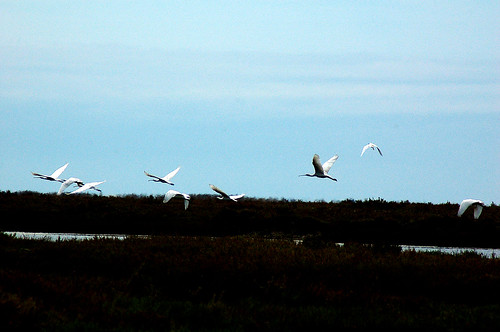
A estratégica situação geográfica da Ria Formosa faz dela um elo importante na rede de zonas húmidas que se estende desde o norte da Europa até à África subsariana, sendo um ponto-chave de paragem para as aves aquáticas em movimento entre os dois continentes. Durante a invernada, o espaço lagunar e ambientes adjacentes oferecem abrigo e alimento a milhares de aves aquáticas e constitui também um importante sítio para nidificação. O Ludo, na extrema poente da ria e onde a Ribeira de S. Lourenço desagua, concentra extensões significativas de salinas, sapais e esteiros, circundados por campos agrícolas, pinhal, um campo de golfe e escassa perturbação humana. Este será talvez um dos pontos com maior abundância de aves aquáticas invernantes. Dos outros animais que também ocorrem na ria destacam-se o toirão e a lontra, dois mamíferos adaptados ao meio aquático e que são aqui registados regularmente.